
By Engr. Gia Santos, Executive Real Estate Advisor
“A healthy home is a clean home.”
That was my whole definition for most of my adult life. Clean floors, good location, decent light, and if the air felt stuffy, buy an air purifier. Problem solved.
Here’s what I didn’t understand. The building decides the quality of your air before you ever plug anything in. It decides how much daylight reaches your bed, how much of your neighbor’s TV you hear at 11 pm, and whether the paint on your walls is still releasing chemicals three years after turnover. An air purifier is a patch. The building is the system.
I’m an engineer, so I should have known this. I didn’t, until I had to study the WELL Building Standard for work. And once I understood it, I could not look at a condo tour the same way again. So let me walk you through it the way I wish someone had walked me through it.
WELL vs LEED, in one line
LEED grades the building’s impact on the planet. WELL grades the building’s impact on you. They’re separate systems that work together, and the best projects pursue both.
If you read my overview of green certifications, you know that LEED, EDGE, and BERDE all measure some version of environmental performance: energy, water, materials, carbon. WELL is the odd one out. It was developed by the International WELL Building Institute, and it’s the first rating system focused exclusively on how buildings affect human health and well-being.
There is research behind the difference. A 2024 study published in Scientific Reports compared occupants of WELL-certified and LEED-certified buildings and found higher satisfaction with indoor environmental quality in the WELL buildings. Both are good. WELL is the one you feel.
The ten things WELL checks
WELL v2 is organized around ten concepts. I find it easiest to turn each one into a question you would actually ask yourself about a home.
-
Air. Is the air you’re breathing clean? Filtered, fresh, with real limits on particulates and chemical compounds.
-
Water. Is the water safe at every tap, not just the one with a filter on it?
-
Nourishment. Does the space make healthier eating easier?
-
Light. Are you getting enough natural daylight, and does the lighting support your sleep cycle?
-
Movement. Does the building nudge you to move, or to sit all day?
-
Thermal comfort. Is the temperature comfortable without the aircon fighting the building?
-
Sound. Can you rest without being disturbed by noise from outside or next door?
-
Materials. Are the finishes around you low-toxicity? Paint, adhesives, flooring.
-
Mind. Does the design support mental well-being? Access to nature, quiet spaces, biophilic design.
-
Community. Does it help build a healthier, more connected community?
Each concept has required preconditions and optional optimizations. A project earns points across all ten and lands at Bronze, Silver, Gold, or Platinum. And unlike a design checklist, parts of WELL are performance-tested on site. Someone actually measures the air.
An air purifier is a patch. The building is the system.
What it looks like inside a unit
This is where it stops being theory. Here’s how WELL-driven design shows up in the three projects I currently work on, all of which are targeting WELL alongside LEED, EDGE, and BERDE.
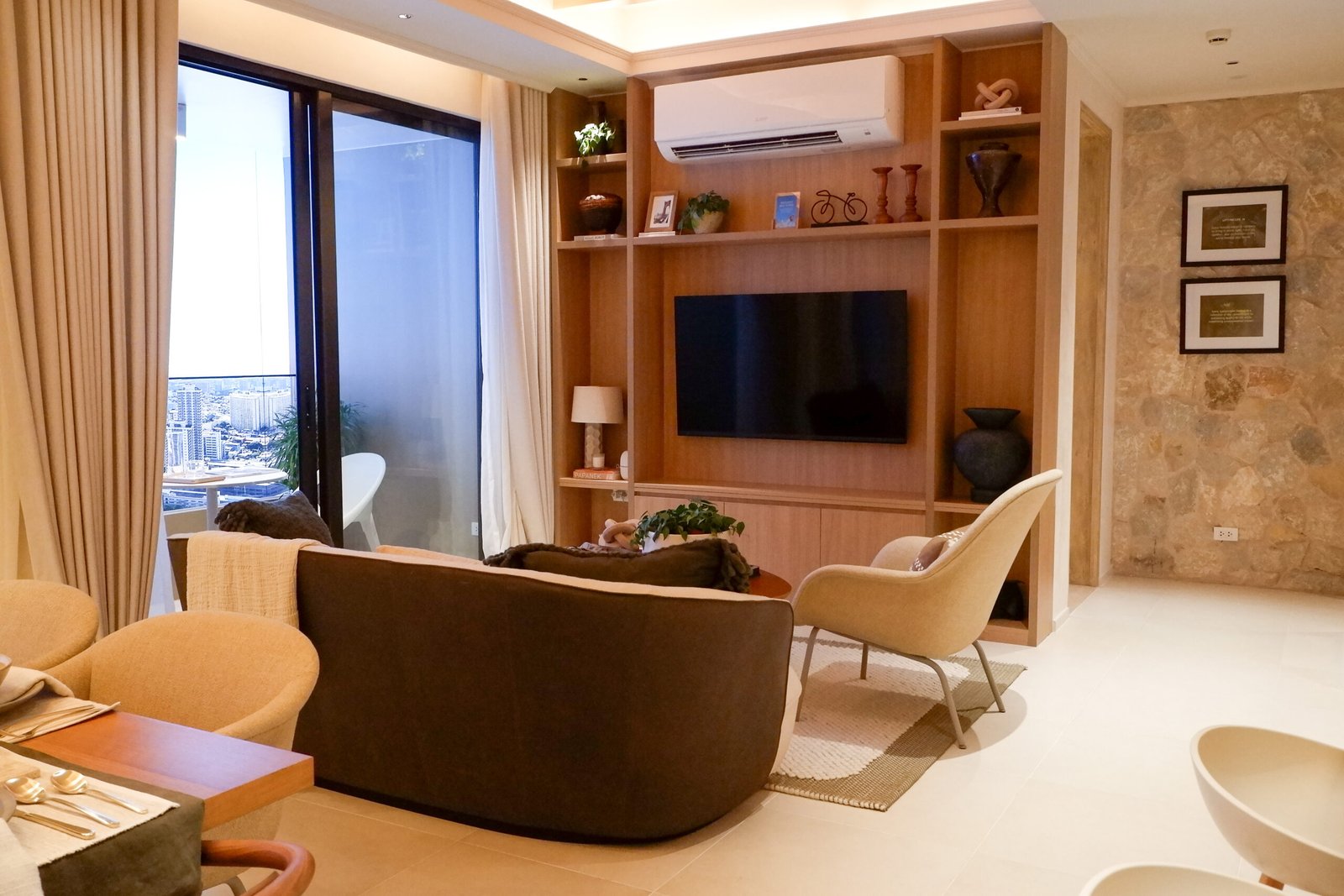
Sondris, Makati
Fresh, filtered air supplied by mechanical ventilation designed to the ASHRAE 62.1 standard. Low-emitting, non-toxic building materials to reduce exposure to harmful compounds. A dedicated outdoor air system in the indoor amenity areas. Units laid out to maximize natural light and ventilation, with a sun room that turns the balcony into a usable living space in two-bedroom units and up. For movement, a 25-meter heated saltwater pool and a fitness center.
Una Apartments, Biñan, Laguna
Energy recovery ventilation with commercial-grade filters, a carbon monoxide monitor in every unit, and a balcony in every unit. Sixty percent of the estate is green and open space. There’s an on-site clinic. This is a high-end mid-rise community, and features like these are rare at this level.
Liv North, Katipunan, Quezon City
Study pods, a sky garden, and a potager garden where residents can grow food, which is the Nourishment concept made literal. Walkable to Ateneo through a private footbridge, which quietly takes care of Movement and Community too. Liv is pursuing all four certifications.
Notice that none of these are decorative. They are mechanical systems, material specifications, and layout decisions. You cannot add them after the building is done.
Who should care most
Everyone benefits from cleaner air. But a few people benefit disproportionately, and I now ask about them in every first meeting.
-
Anyone with asthma, allergies, or respiratory sensitivity. Filtered fresh air and low-VOC materials are the difference between managing symptoms and not having them.
-
Parents. Children spend more time indoors than we think, and their lungs are still developing. If you’re buying a unit near Ateneo or DLSU for a child in school, the air they study in matters as much as the commute they skip.
-
People who work from home. Daylight, acoustics, and thermal comfort are productivity features. You will feel them every day at 3 pm.
-
Investors renting to any of the above. Developers are already reporting that the most desirable projects integrate sustainability and wellness into their core design. Wellness features are a leasing advantage, not a cost.
Is it real, or is it a sticker?
Fair question. Three things keep WELL honest. First, every feature is third-party verified by Green Business Certification Inc., the same body that handles LEED. Second, certification has to be renewed every three years, so a building cannot earn it once and coast. Third, it’s still rare here. Menarco Tower in BGC was the first WELL-certified building in the Philippines, and it’s an office. Residential WELL is only now arriving, which is exactly why I think it will matter at resale.
What to ask before you reserve
-
Is the project registered with IWBI, and which level is it targeting? “Wellness-inspired” is not an answer. Registration is.
-
What’s the ventilation system? Recirculating or fresh-air supply? What filters? This one question separates most buildings.
-
What’s in the materials spec? Low-VOC paints, adhesives, and flooring should be named, not implied.
I still buy air purifiers, by the way. Old habits. But I now know that the purifier is working with the building or against it, and I’d rather it be the former.
So here’s what I’ll leave you with. You already know what you want your life to feel like at home. Rested. Clear-headed. Able to breathe. The question is whether the building you’re about to buy was engineered to give you that, or whether you’ll be patching it for the next thirty years.
Luxury, engineered means the health of the people inside was a design input, not an afterthought. Live intentionally. Live consciously.
If you want to see what a WELL-targeted unit actually looks like in Makati, Laguna, or Quezon City, my inbox is open.